Section 8.2
Defective Air Compressor
To determine if a defective air compressor is causing excessive crankcase pressure, perform the following:
- Perform a crankcase pressure test and record the test results; refer to "2.1 Crankcase Pressure Test" .
- Disconnect the air discharge line from the air compressor; see Figure
"Air Line Attachments"
for air line attachments. Refer to the MBE 4000 Service Manual
(6SE420
, Chapter 11, “Special Equipment”.
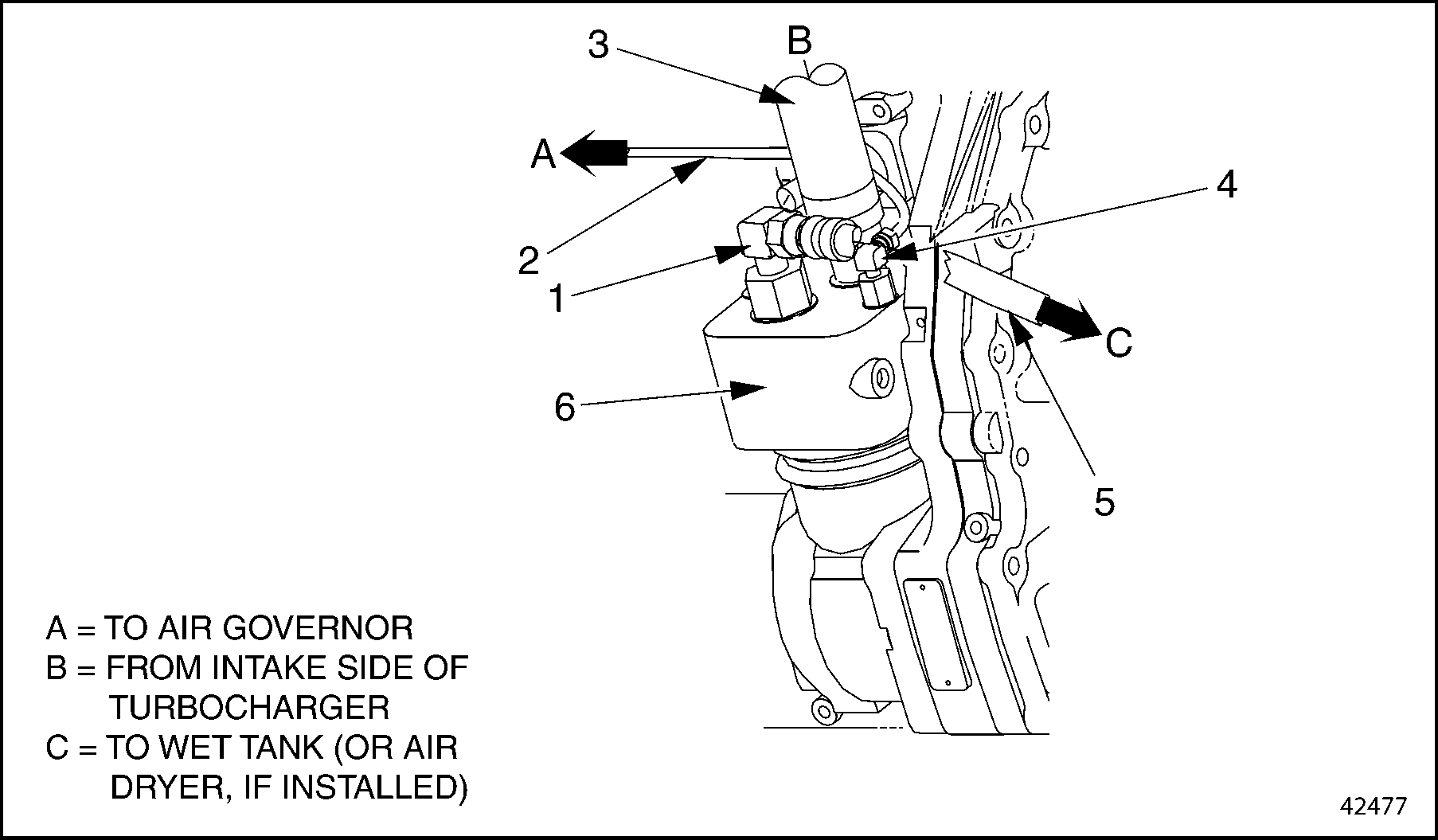
1. Discharge Port
4. Unloader Port
2. Unloader Air Line
5. Discharge Air Line
3. Intake Air Line
6. Air Compressor
Figure 1. Air Line Attachments
- Repeat step 1 and record test results.
- Compare the results of test one with test two.
- If the engine crankcase pressure remained the same, check the turbocharger;
- If the engine crankcase pressure decreased, repair or replace the air compressor; refer to "8.2.1 Test Engine with Repaired Air Compressor" , test engine with repaired air compressor
Section 8.2.1
Test Engine with Repaired Air Compressor
Perform the following steps to determine if a repaired air compressor resolved the excessive crankcase pressure:
 PERSONAL INJURY |
|
To avoid injury before starting and running the engine, ensure the vehicle is parked on a level surface, parking brake is set, and the wheels are blocked. |
- Start and run the engine.
- Perform a crankcase pressure test; refer to "2.1 Crankcase Pressure Test"
.
- If the engine crankcase pressure is within 0.62 kPa (2.5 in. H2 O), no further troubleshooting is required. Shut down the engine.
- If the engine crankcase pressure is not within 0.62 kPa (2.5 in. H2 O), shutdown the engine. Check the turbocharger; refer to "8.3 Defective Turbocharger"
| EPA07 MBE 4000 DDEC VI Troubleshooting Guide - 6SE568 |
| Generated on 10-13-2008 |